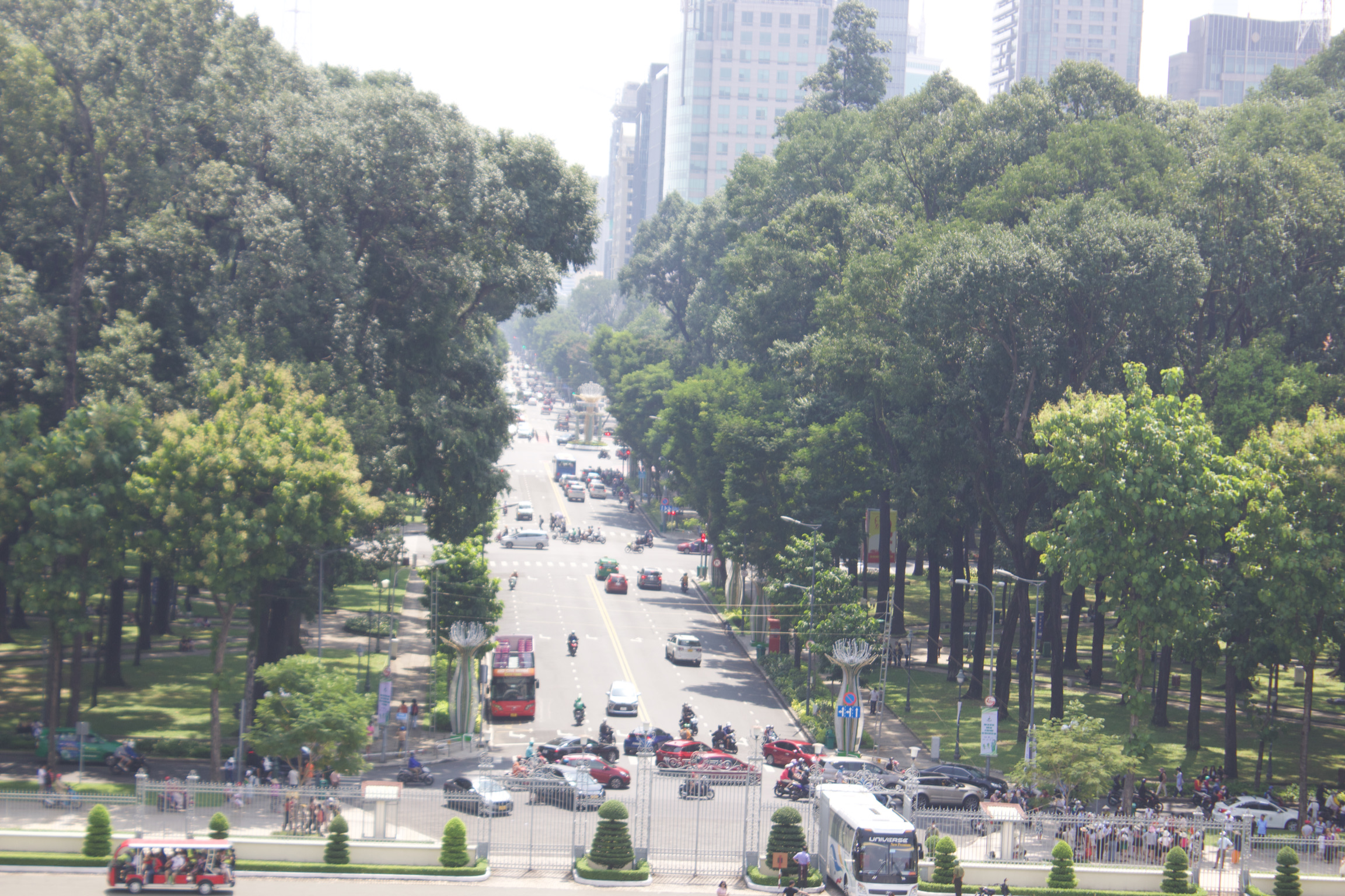
Housing many unique flora and fauna from its lowlands to its highlands, Vietnam is on a path of rapid expansion, especially in Da Nang City. The highly sought-after port town has experienced tremendous growth in its tourism industry. Visible first hand in its newly erupted skyscrapers and resorts, the large amounts of urban development are unavoidable. Such development has warranted proactive efforts in the conservation of its green spaces, seen partly in the installation of several canopy bridges in Son Tra Nature Reserve.
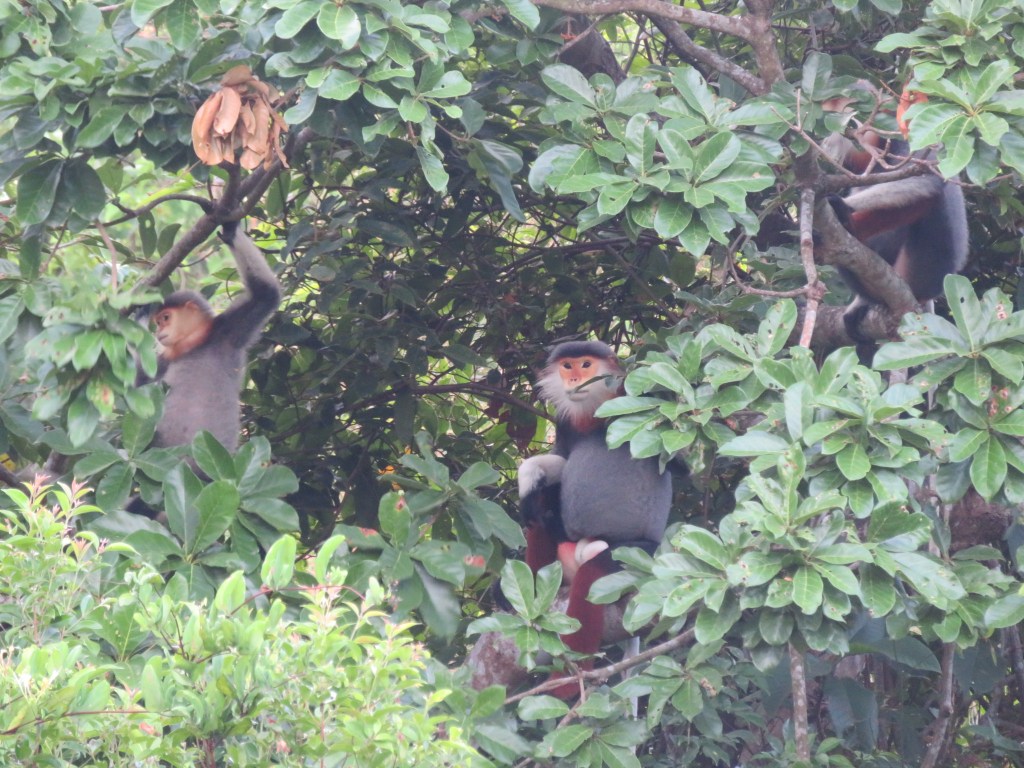
Known locally as Monkey Mountain, Son Tra peninsula houses a large population of the Red-Shanked Douc Langurs (Pygathrix nemaeus) and is recognized as a nationally protected Nature Reserve (Hoang et al. 2019) following its use as a military base.
Disclaimer: This site/blog, Friends in High Places – Vietnam, is not an official site of the Fulbright Program or the U.S. Department of State. The views expressed on this site are entirely those of its author, Lisa Rhodes and do not represent the views of the Fulbright Program, the U.S. Department of State, or any of its partner organizations.
Research Objective (s):
Do artificial bridges mitigate the impacts of habitat fragmentation on tree-dwelling species in Son Tra National Park?
Ecology/Biological Anthropology
What are the stories that make up the grassroots conservation community in Da Nang?
Cultural Anthropology
Background:
Gentle looking yet powerful, the Red Shanked Douc Langur is a primate that can be found in small families around Central and Northern Vietnam and Laos. While this species of Douc is considered critically endangered, all forest wild life of Son Tra peninsula face the risk of habitat loss. Land in Da Nang, a key port city with beautiful coastlines and warm sandy beaches, is of particular interest to developers. As this demand continues to rise, there is fear that short term profits will continue to take value over long term sustainability.
In an effort to support local wildlife, non-profit organizations installed artificial bridges to provide structures for crossing gaps in the high trees. Formed by the active roads segregating Son Tra, these gaps are a form of habitat degradation known as ‘fragmentation’. Habitat degradation is one of the most common man-made issues influencing species extinction. Loss of habitat due to agricultural or commercial land development can impact a species ability to adequately find food, fight off disease, and remain genetically diverse.
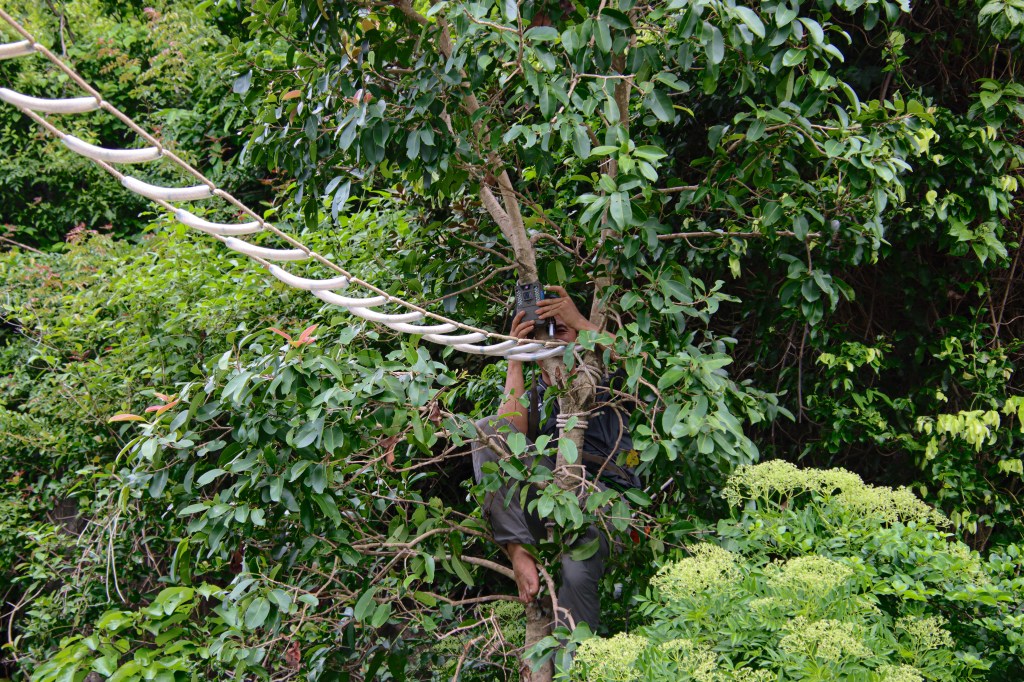
Canopy bridges can take many forms, those that are most common are similar to the ones that are found in Son Tra NR. Consisting of two parallel ropes connected by various rungs, they often resemble horizontal ladders.

 Friends in High Places-Vietnam
Leave a comment